

Here’s something that doesn’t come up enough in conversations about chiropractic care. You spend years mastering the clinical side, the adjustments, the assessments, the treatment planning, and then you open your clinic and realize that a significant chunk of your actual workday isn’t spent doing any of that. It’s spent writing notes. Lots and lots of notes.
For most practitioners, documentation is the part of the job that quietly steals the most time. It happens after every visit, it has to be accurate, it has to meet compliance standards, and it has to be done even when you’ve already seen twenty patients, and your brain is running on empty. It’s not glamorous work, but it’s critical, and how well you handle it has a direct impact on everything from your insurance reimbursements to your legal protection to the continuity of your patient care.
The good news is that this doesn’t have to be as painful as it often is. If you’ve been struggling with documentation, the problem probably isn’t your writing; it’s your system. And the right system starts with understanding chiropractic SOAP notes and building a workflow around them that works in real life.
What Chiropractic SOAP Notes Are Really Trying to Do For Your Practice
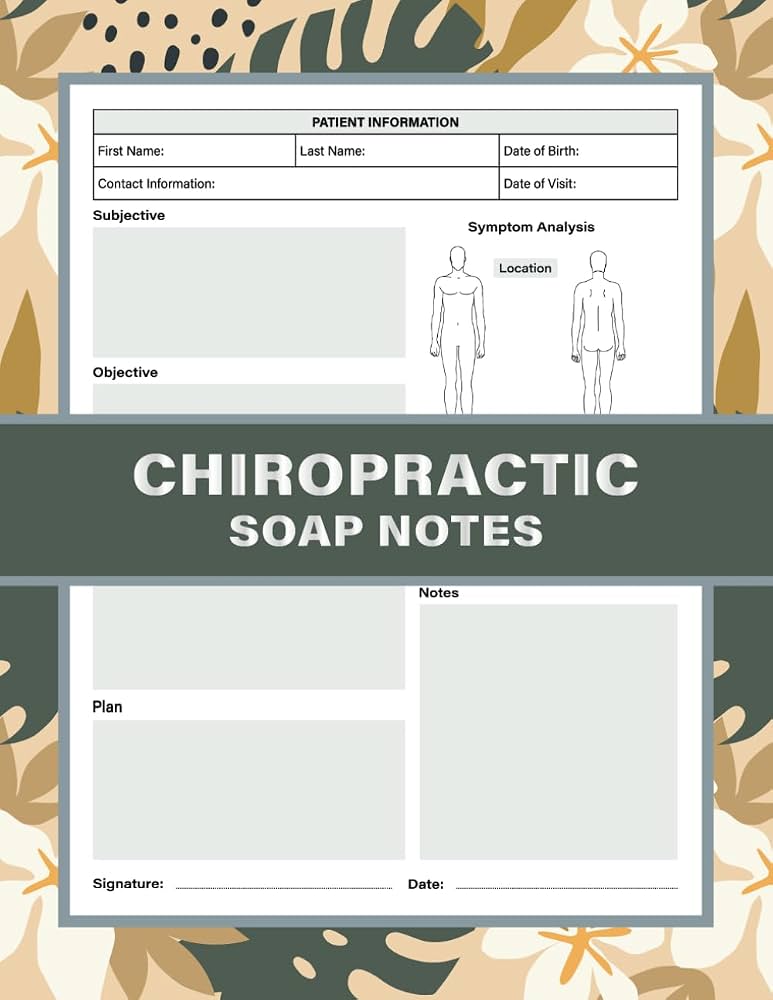
Most practitioners learn about SOAP notes early in their training and then spend years trying to make them work efficiently in an actual busy clinic. The idea behind them is genuinely good. SOAP stands for Subjective, Objective, Assessment, and Plan, and when used well, this structure creates a clear, consistent record of every patient visit that tells a complete clinical story briefly.
The Subjective section is the patient’s voice, what they’re feeling, where the pain is, and how it’s changed since the last visit. The Objective section is what you observe and measure, including the range of motion, orthopaedic test results, posture findings, and palpation notes. The Assessment pulls everything together into your clinical interpretation. And the Plan lays out exactly where you’re going next with treatment.
When chiropractic SOAP notes are written well, they do something really valuable. They create a thread that runs through an entire treatment relationship. Any practitioner who picks up that chart even years later can understand exactly what was happening with that patient, what was tried, and what worked. That’s not just good clinical practice. It’s protection, it’s communication, and it’s the kind of documentation that insurance companies and legal situations both demand.
The problem isn’t the format. The problem is that writing thorough, compliant SOAP notes for every single patient day after day, across a full schedule, is genuinely time-consuming when you’re doing it from scratch each time. That’s where most clinics start to feel the strain.
How Cloud Chiropractic Software Transforms the Way You Handle Documentation
This is where technology stops being a nice-to-have and starts being something that fundamentally changes your relationship with documentation. Cloud chiropractic software built specifically for chiropractic practices doesn’t just store your notes digitally; it actively helps you write them faster, more accurately, and in a format that holds up under scrutiny.
The difference is in the templates. Instead of starting from a blank page after every visit, you’re working from smart, pre-built structures that already know what a chiropractic SOAP note looks like. Your Subjective fields prompt you with the right questions. Your Objective section has built-in body diagrams, range of motion scales, and orthopedic test checkboxes. Your Assessment pulls from your clinical findings automatically. Your Plan section links directly to your scheduling and billing workflow, so everything stays connected.
The single detail that practitioners mention most when they describe switching to cloud chiropractic software for their documentation:
- Notes that used to take fifteen to twenty minutes to write thoughtfully can be completed in four or five minutes without cutting corners because the structure is already there, and the repetitive parts fill in intelligently based on your previous entries.
That’s not a small thing. That’s potentially two to three hours returned to your day. Hours you didn’t know you were losing until you suddenly have them back.
Being cloud-based adds another layer that matters more than people initially expect. Your notes are accessible from anywhere, from the treatment room, from home if you need to finish something, from a second location if you expand. There’s no server to maintain, no local backup to worry about, and no moment of panic when a computer dies and you wonder if your records went with it.
Building a SOAP Note Workflow That Holds Up in a Real Busy Clinic
Knowing what good chiropractic SOAP notes look like is one thing. Building a sustainable system for producing them consistently across a full patient schedule is another conversation entirely. This is where clinic workflow design actually matters.
The practitioners who handle documentation most smoothly tend to share a few habits. They document as close to the visit as possible ideally right after the patient leaves the room, while the details are still sharp. They use software templates that match their clinical language so they’re not translating their thoughts into an unfamiliar format under time pressure. And they treat their notes as a living part of the patient relationship, not just a compliance checkbox.
Good cloud chiropractic software supports all of this by making the documentation process feel like a natural extension of the clinical visit rather than a separate administrative burden bolted onto the end of the day. When your tools fit your workflow instead of fighting against it, the notes get better and the time spent on them gets shorter, which is exactly the combination every clinic should be aiming for.
What Changes When Documentation Finally Stops Being a Problem
There’s a shift that happens in a clinic when the documentation burden lifts. It’s not just that things are faster, though they are. It’s that the energy in the building changes. Practitioners are less drained at the end of the day. The front desk isn’t fielding questions about missing records. Insurance claims go out clean because the notes behind them are complete and accurate. Patient care improves because treatment plans are better documented and easier to follow over time.
The financial impact is real, too. Clean, thorough documentation supports higher reimbursement rates and withstands insurance audits without requiring panic or scrambling. When your notes consistently tell a clear clinical story, you’re protected in ways that matter both legally and financially.
Conclusion
Documentation will always be part of running a chiropractic clinic; that’s not going to change. But how much of your life it consumes, and how much stress it carries with it, is very much within your control. Getting serious about your chiropractic SOAP notes workflow and backing it up with tools that were actually built for how you work is one of the most practical investments you can make in your practice.
Software Motif is committed to helping chiropractic clinics find exactly that kind of fit software that doesn’t just check boxes but genuinely makes the day easier for practitioners and staff alike. If documentation has been the thorn in your side for longer than you’d like to admit, the right cloud chiropractic software might be closer than you think. Your notes deserve a better system, and honestly, so do you.
Frequently Asked Questions
- What makes chiropractic SOAP notes different from regular medical SOAP notes?
The core SOAP structure is the same, but chiropractic SOAP notes are tailored to chiropractic-specific findings and terminology. That means fields for spinal assessments, orthopaedic test results, body region diagrams, range of motion measurements, and treatment codes that align with chiropractic billing, none of which are standard in general medical documentation formats.
- How does cloud chiropractic softwareactually speedup note writing?
Instead of starting from scratch after every visit, cloud chiropractic software gives you intelligent templates that already match your workflow. Fields auto-populate based on previous entries, body diagrams let you mark findings visually rather than describing them in lengthy text, and billing codes connect directly from your clinical notes, cutting documentation time dramatically without sacrificing accuracy.
- Is cloud-based software safe for storing sensitive patient records?
Reputable cloud chiropractic software platforms are built with HIPAA compliance at their core. That means encrypted data storage, secure access controls, automatic backups, and audit trails that track every interaction with patient records. In many ways, cloud storage is more secure than a local server that depends on your own backup habits and hardware reliability.
- Can I access my chiropractic SOAP notes from outside the clinic?
Yes, and this is one of the most practical advantages of cloud-based systems. Whether you need to review a patient’s history from home, finish notes while traveling, or access records from a second clinic location, everything is available securely from any device with an internet connection. No VPNs, no remote desktop setups, no frustration.
- What should I look for in software to make sure it handles chiropractic documentation well?
Look for platforms that offer chiropractic-specific SOAP note templates out of the box not generic medical templates you have to customize yourself. You also want built-in body diagrams, a range of motion tools, and direct integration between your clinical notes and billing workflow. And always ask whether the platform was built with chiropractors as the primary user, not as an afterthought added onto a general medical product.